CISO
A live view of control posture, open gaps and operational signal mapped to the CSCRF baseline the board cares about.

Governance, Risk and Compliance for regulated finance
orbitGRC supports CSCRF implementation, DPDP records, evidence management and audit readiness for AMCs and regulated financial organizations. Final compliance interpretation rests with your authorized officers, auditors and advisors.
The problem
Most AMCs already do compliance work. The problem is that the evidence, controls, records and audit trail live in too many places to defend efficiently.
Approvals sit in inboxes, evidence sits in shared drives, status sits in spreadsheets. Reconstructing a control story for an auditor takes days.
Control libraries live in offline workbooks. Ownership, last-tested dates and applicability drift away from the actual operational reality.
Processing activities, consent records and breach workflows are maintained separately from the security controls that actually protect that data.
Operational tools produce alerts, tickets and findings, but none of that signal is tied back to the CSCRF control it supports or contradicts.
When an audit notice arrives, teams scramble across departments to assemble what should have been continuously maintained.
How it works
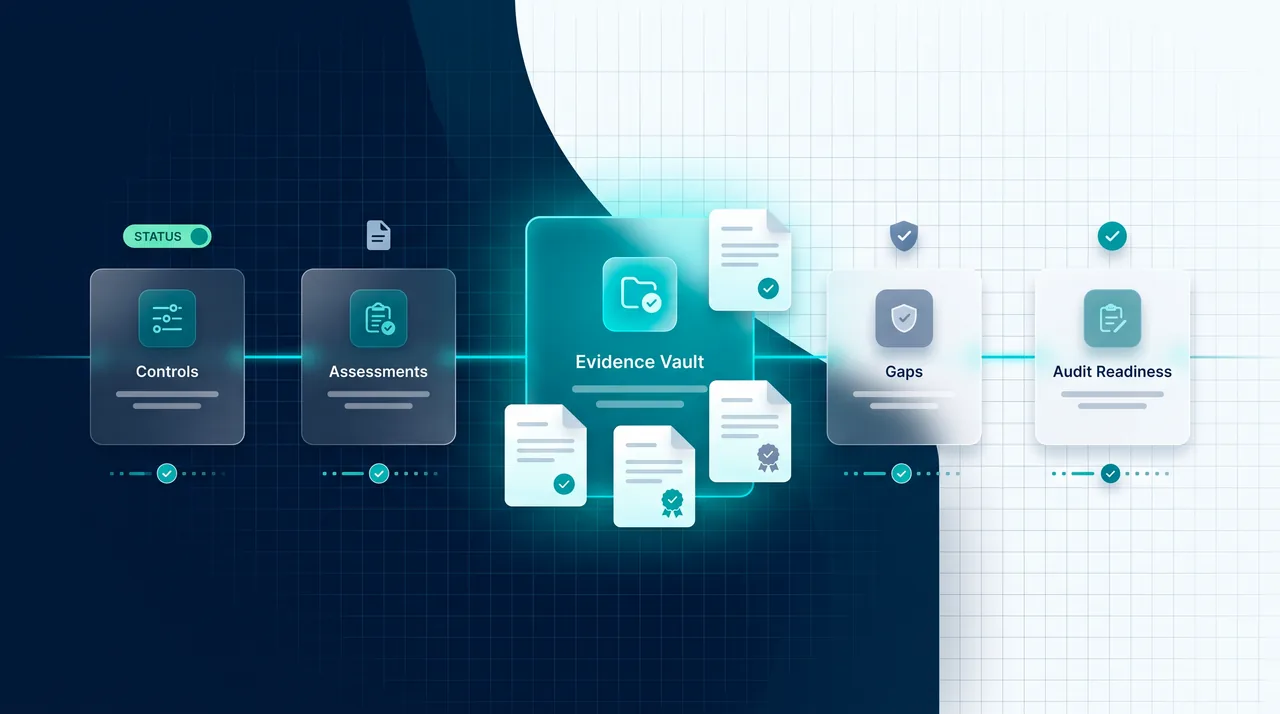
orbitGRC structures the compliance lifecycle so the next audit is a query against a maintained system, not a salvage operation.
Maintain a versioned CSCRF control library with applicability, ownership, frequency and references mapped to your organization.
Run recurring or ad-hoc assessments against the control library, captured with maker-checker discipline and a clear audit trail.
Convert assessment findings into tracked gaps with severity, owner, remediation plan, target date and closure evidence.
Attach approved, classified evidence to each control with ownership, validity period, approver and tamper-evident hashes.
Produce point-in-time, citable evidence packages for internal audit, external audit and regulator queries.
Built for the people who own compliance
orbitGRC gives each stakeholder the view they need without forcing them into someone else's tool.
orbitGRC gives each stakeholder a tailored view without forcing them into someone else's tool.
A live view of control posture, open gaps and operational signal mapped to the CSCRF baseline the board cares about.
Structured assessments, maker-checker approvals and a defensible record of how each control is interpreted and evidenced.
Processing-activity registry, consent records, retention schedules and breach workflow tied to the underlying controls.
Third-party inventory with onboarding, posture review, contractual obligations and renewal triggers connected to the control register.
A clear list of the controls each application must satisfy, the evidence required, and what is expiring or overdue.
Independent, read-only audit trail across controls, assessments, evidence and approvals, with point-in-time snapshots.
Executive-level dashboards summarising posture, open risks and regulatory exposure without drilling into operational noise.
Designed to connect to your operational stack
orbitGRC is structured for AMCs and regulated financial organizations that already operate a real security stack. Where you have signal, orbitGRC is designed to link it back to the relevant control.
Link detection-and-response signal to the CSCRF monitoring and incident-response controls that depend on it.
Connect change, incident and request tickets so that operational work supporting a control can be referenced as evidence.
Pull vulnerability assessment and penetration-test findings into the gap register with severity and remediation tracking.
Surface configuration posture and platform-level controls from your cloud monitoring stack into the relevant CSCRF control families.
Reference retention, integrity and review evidence from log management platforms as part of audit-ready packages.
Authenticate users through your enterprise identity provider with role-based access mapped to compliance responsibilities.
Reference documents already maintained in your document management systems, with ownership, classification and approval state captured in orbitGRC.
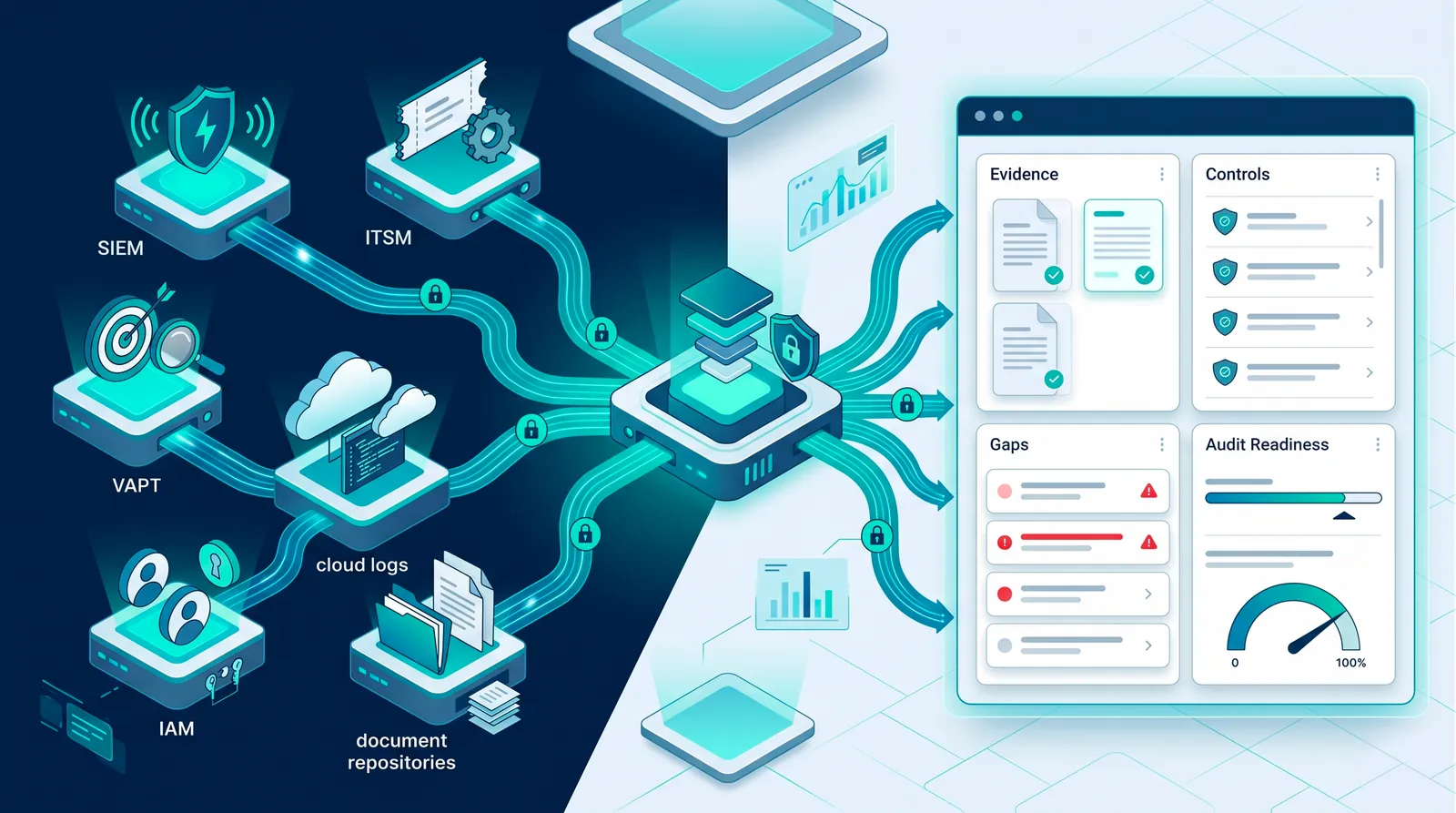
Integration possibilities — not all are necessarily live.
Illustrative example
Fictional exampleNivora's compliance team maps a CSCRF monitoring control to the fund-accounting platform, with ownership assigned to the application owner and a quarterly review cadence.
The application owner uploads the latest monitoring configuration, classified appropriately, with a content hash and an approver recorded in orbitGRC.
An assessment identifies that a portion of the monitoring rule set has not been reviewed within the last quarter. A gap is opened with severity, owner and target closure date.
Open ITSM tickets covering the rule-set review and a recent VAPT finding on a related host are referenced against the gap so reviewers see the full operational picture.
Because the platform processes personal data, the corresponding processing-activity record is updated, and the breach-notification workflow stays available if monitoring detects an incident.
When the internal auditor opens a review window, Nivora generates a point-in-time package showing the control, the evidence, the assessment result, the linked tickets and the gap status.
When a reviewer asks the assistant about monitoring coverage on the fund-accounting platform, it answers using only Nivora's records and cites the specific controls, evidence items and gaps it relied on.
What orbitGRC does that other tools do not
orbitGRC is not a replacement for your security and IT stack. It is the connective layer that turns the work those tools already do into structured, audit-ready evidence.
Detects security events and raises alerts.
Shows alerts, but does not prove audit readiness.
Manages tickets for incidents, changes and requests.
Tracks tickets, but does not explain which control a ticket supports.
Hold policies, evidence files and approvals.
Store files, but do not prove evidence ownership, approval, expiry or control relevance.
Track controls, gaps and evidence in offline workbooks.
Are flexible but fragile, manual and weak for audit traceability.
Offer a broad framework engine across many regulations.
Are often broad and customization-heavy, with weak alignment to the specifics of CSCRF and DPDP for Indian AMCs.
Connects controls, assessments, gaps, evidence and operational signal into one workflow.
Designed for AMCs and regulated financial organizations, structured for internal and external audit readiness, with permission-aware AI assistance.
Integrated operating model
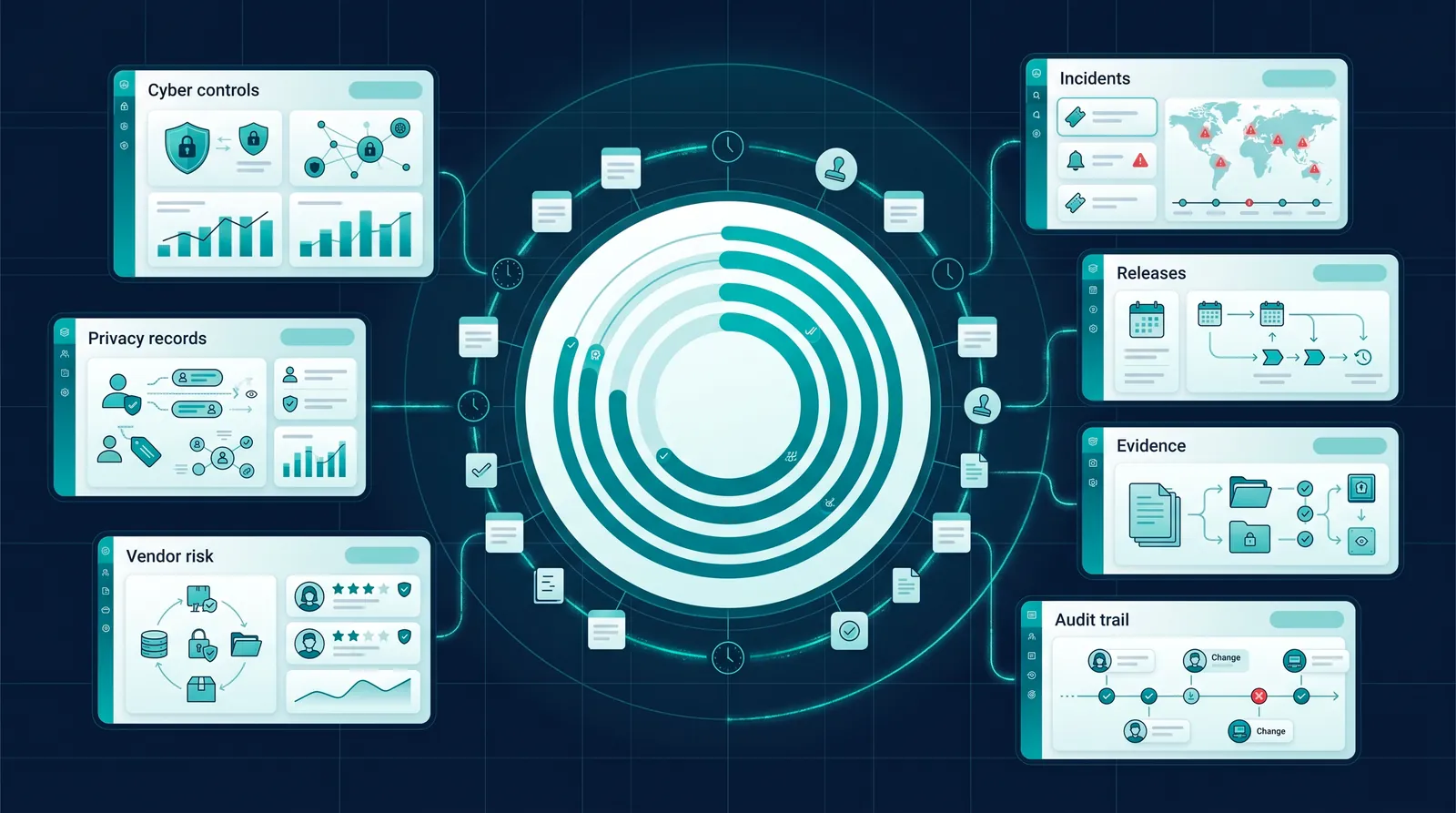
orbitGRC is designed to link cyber controls, privacy records, vendor risk, incidents, releases, evidence and the audit trail into a single operating model — so the same source of truth supports day-to-day control work and audit-day questions.
Teams can prepare and review their own readiness picture, with traceable links between controls, supporting evidence and the decisions that produced it — helping reduce duplication across cyber, privacy, vendor and engineering workflows.
Responsible AI for compliance
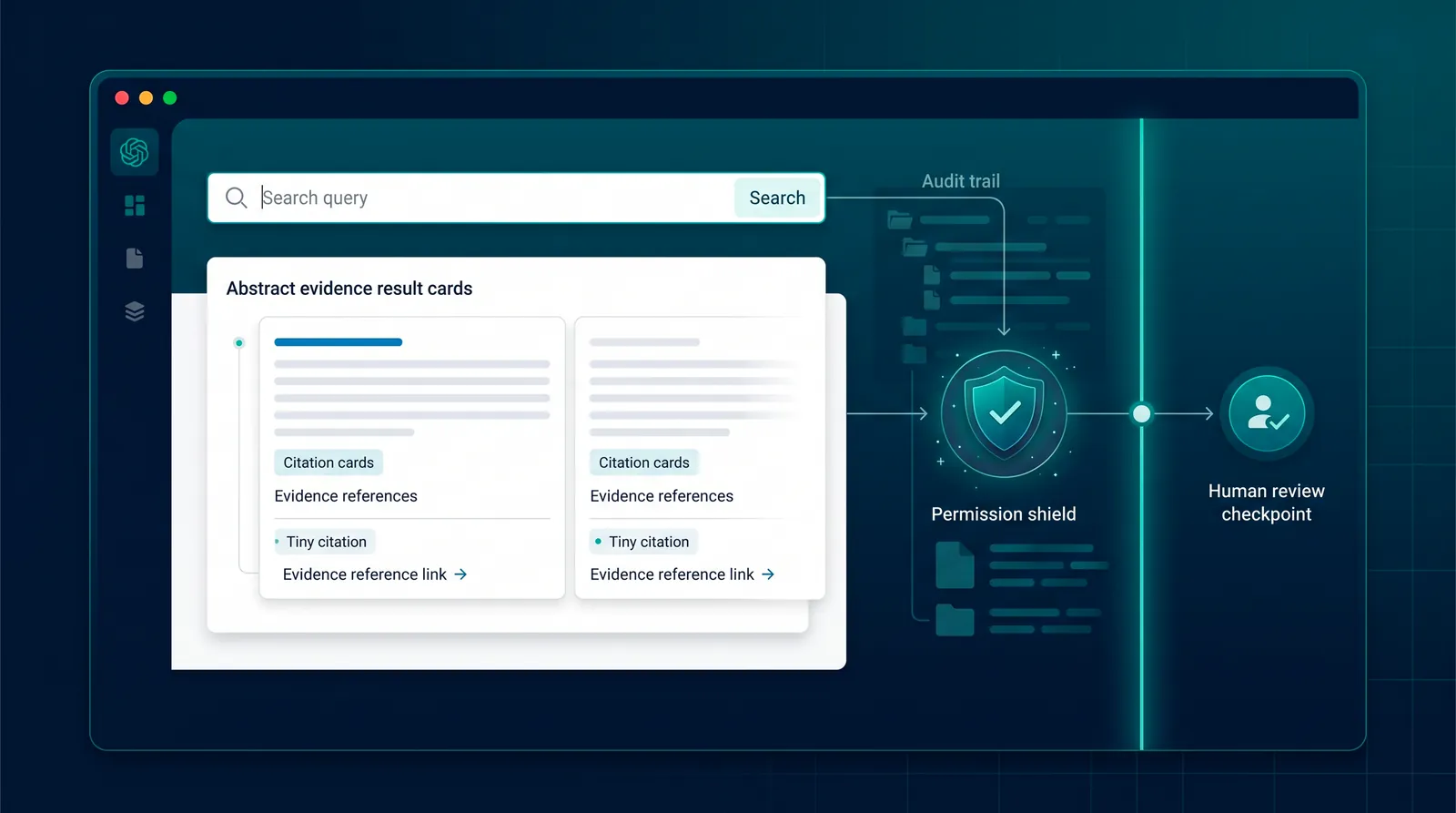
The AI assistant inside orbitGRC is designed to accelerate discovery and explanation, not to issue compliance judgements.
The assistant helps users find relevant controls, evidence, gaps and historical decisions inside orbitGRC faster than manual search.
The assistant will not declare an organization compliant or non-compliant. Compliance interpretation is a human responsibility.
The assistant retrieves only records the requesting user is authorized to see. It cannot surface evidence outside that scope.
Responses reference the specific controls, evidence items, gaps or assessments they were derived from, so reviewers can verify directly.
orbitGRC supports the people who own compliance. It does not replace their judgement, their sign-off or their statutory responsibilities.
Frequently asked questions
No. orbitGRC supports the work that auditors and compliance officers already do by organizing controls, evidence and assessment history in one place. Independent audit opinion and sign-off remain with your auditors.
No platform can guarantee compliance. orbitGRC supports CSCRF implementation, DPDP readiness, evidence management and audit readiness. Final compliance interpretation and regulatory submissions remain the responsibility of your organization and its authorized officers, auditors and advisors.
orbitGRC is designed to reference operational signal from SIEM, ITSM, VAPT, cloud monitoring, log management, identity providers and document repositories. These are integration possibilities; specific configurations vary by customer environment, and not all integrations are necessarily live at any given time.
Yes. orbitGRC is designed to support DPDP-aligned processing-activity records, consent and retention metadata, and the breach-notification workflow, alongside the security controls that protect personal data.
orbitGRC is designed for AMCs first, given the structure of SEBI CSCRF. The same workflow is applicable to other regulated financial organizations with comparable control, evidence and audit-readiness needs.
Yes. orbitGRC supports customer-controlled cloud deployment on suitable plans, so that data and evidence remain inside the customer's own perimeter.
The assistant performs permission-aware retrieval over your records, cites the specific platform records it relied on, does not issue compliance verdicts, and every interaction is audit-logged. Final decisions remain with your authorized officers, auditors and advisors.
orbitGRC is designed for in-India hosting and customer-controlled deployment options. Specific data residency, region and tenancy details are confirmed as part of the commercial engagement.
Still have questions? Contact us.
No commitment · 30-minute walkthrough · In-India hosting
We walk through how orbitGRC supports CSCRF implementation, DPDP records, evidence management and audit readiness in your organization. No commitment required.